The $2,400 Lesson From Our 2024 Bulk Hiking Shoe Order
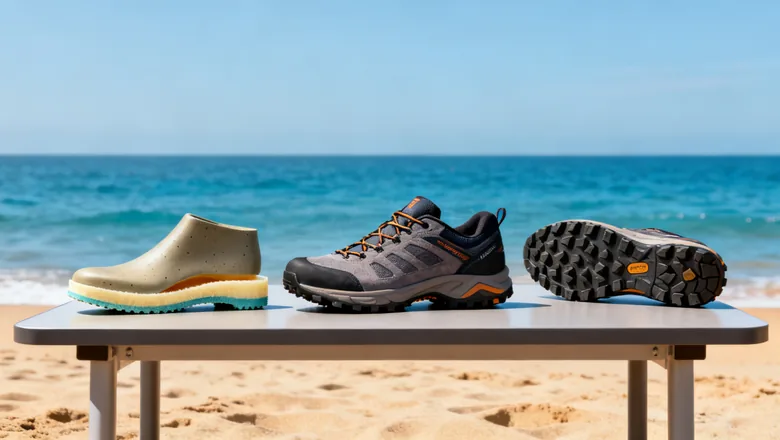
In late January 2024, I was sitting in our office breaking down my department's $180,000 annual budget across three categories: trail, running, and basketball. For the 2024 hiking season, I needed to source roughly 2,500 pairs of bulk hiking shoes and 800 pairs of running shoes. Performance socks—including the styles that fill our Stance running socks shelf position—ran through a separate, smaller procurement track.
The vendor who'd supplied our entry-level hiking shoe for six years sent a quote with a 9% increase. From $38.50 to $41.97 per pair. The reasoning was vague: "rising material costs."
I didn't want to be the guy who reflexively jumps ship every time a supplier raises prices. But 9% was enough to make me recalculate.
Eight quotes, three months, one very attractive number
Between February and April, I submitted requests to eight suppliers. I ran a TCO spreadsheet, sampled two factories, and pulled last year's defect-rate data. In late March, a factory I'd never worked with quoted $34.50 per pair.
That was roughly 17% below the increased quote from the incumbent. And 6.3% below what Stance later quoted us at $36.80 per pair.
Same spec on both sides: rubber outsole, EVA midsole, suede-and-mesh upper, and a toe cap. The difference was that the low-quote factory sent me a one-page email: "FOB $34.50/pair, MOQ 2,000, 30 days."
Stance sent a four-page PDF itemizing shipping, labeling, sample fees, mold modification, and payment terms. Everything.
I thought, at the time, that Stance was just being fussy with their paperwork. Six percent cheaper is six percent cheaper. That's the kind of small-math decision I should have been able to make in my sleep.
Then the invoice arrived.
What wasn't in that one-page email
The first warning sign came in May, when the first shipment landed. Of 2,500 pairs, 37 had sole-bonding issues. Some had mislabeled size tags.
I called the factory. "We'll replace the defective units, but shipping goes through our standard terms."
That was $1,650 in freight, on my dime.
There was also a charge that appeared before production even started: the factory said the toe cap mold needed a modification to match my spec sheet. "We can do it," they said, "for $1,450." That wasn't in the one-page email.
And a third: "shipping included" wasn't written anywhere. When the freight forwarder billed us, there was a $900 overweight surcharge.
I ran the numbers:
- Base cost: 2,500 pairs × $34.50 = $86,250
- Mold modification: $1,450
- Sample fees: $300
- Freight surcharge: $900
- Rework and shipping on defective pairs: $1,650
Total: $90,550. And because the rework delayed our launch by 11 days, we missed a rush-order window worth roughly $2,200 in sales. Add in 18 hours of my time managing the mess—around $900 in internal cost—and the true cost of that order was closer to $93,650.
Divide that by the 2,430 sellable pairs (roughly 70 were either reworked in batches or written off), and the effective cost per pair was:
$93,650 ÷ 2,430 = $38.54 per pair
That's before counting the $2,200 in lost sales. If you include that, it goes higher.
The four-page PDF, recalculated
I pulled up the Stance quote again.
Their price was $36.80 per pair, including shipping, custom labeling, sample fees, mold modification (if needed), and a 28-day lead time. No hidden line items. All of it was in the four-page PDF.
2,500 pairs × $36.80 = $92,000. Sellable pairs: 2,500 (Stance's defect rate ran at about 0.4%, and they replaced units without shipping charges).
Effective cost per pair: $36.80.
I put the two quotes side by side on my desk—one email, one PDF. Same shoe, two numbers. That's when I finally understood what total cost of ownership looks like outside of a spreadsheet.
Total cost of ownership includes: base product price, setup fees (if any), shipping and handling, rush fees (if needed), and potential rework costs. The lowest quoted price often isn't the lowest total cost.
I'd assumed that the lowest unit price meant the lowest overall spend. It didn't. The higher-quoted supplier actually came out 4.7% cheaper on a per-sellable-pair basis.
That same quarter I was running another sourcing track for basketball models—the ones our training-camp clients use for defensive stance stability and lateral push-off. Different cost structure entirely. But the same rule applied: I wasn't going to get fooled by a quote with only one number on it again.
What we changed—and what I'd suggest
To be fair, the low-quote factory's shoes weren't garbage. They were acceptable. The problem was that "acceptable" didn't show up until after we'd paid for mold changes, freight surcharges, and 11 days of rework.
I'm not saying every opaque quote is a scam. I get why some factories post FOB-only pricing—that's the industry norm. But the supplier who puts everything into the quote—even if the total looks higher—usually ends up costing less.
Since the 2024 hiking shoe order, our department has a new rule: every RFQ must include a "what's NOT included" checklist. Not "what's your price"—"what does your price leave out?"
That single question saved us twice in the next three sourcing cycles. In one case, a vendor admitted a $700 die-cut fee upfront. In another, a supplier flagged that their price didn't include inner-box printing—something we would have caught at the warehouse, not during negotiation.
As for the hiking shoes wholesale cost guide the team keeps asking for—we now have our own internal version. It doesn't list prices. It lists fee categories: setup fees, mold changes, freight surcharges, rework responsibility, and payment terms. That document has done more for our margins than any single price negotiation I've run in the past three years.
The lesson isn't complicated. The cheapest quote usually isn't the cheapest order. But I paid $2,400—in rework, surcharges, and lost sales—to actually remember it.

I’m Jane Smith, a senior content writer with over 15 years of experience in the packaging and printing industry. I specialize in writing about the latest trends, technologies, and best practices in packaging design, sustainability, and printing techniques. My goal is to help businesses understand complex printing processes and design solutions that enhance both product packaging and brand visibility.
Leave a technical comment
Do not include credentials, personal data or confidential factory information.